



| Juglans cinerea | USDA Zone: 2-7 |
Butternut is a large tree that is typically grown for its edible qualities. It produces large brown round nuts in hard shells which are usually ready for picking from early to late fall. The nuts have a sweet taste and an oily texture.
The nuts are most often used in the following ways:
- Fresh Eating
- Baking
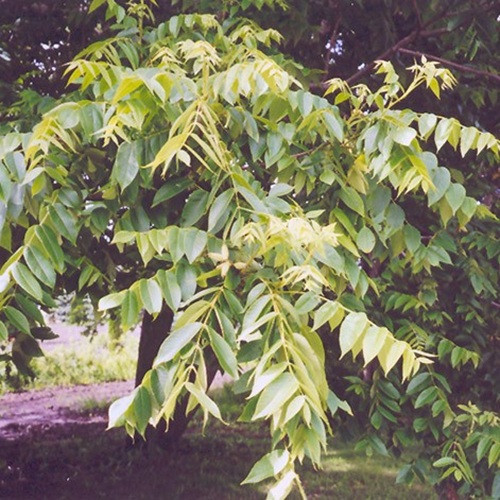
Butternut is a medium sized shade tree with a wide spreading canopy and interestingly textured compound leaves; sweet oily walnuts are edible and attract squirrels, can be somewhat messy in fall; possibly the hardiest of all nut trees.
Aside from its primary use as an edible, Butternut is sutiable for the following landscape applications;
- Shade
- Orchard/Edible Landscaping
Bloom Time: Spring
Native to Ontario
Nuts, encased in yellow-green husks, mature in autumn
Larval host for a bunch of butterflies and moths.
|
Key Feature
|
Light Needs | Landscape Uses |
 |
 |
 |
|
|
|
| More About Butternut Tree |
| Height: 50 ft |
Spread: 40 ft |
|
The flowers are wind-pollinated, with male and female flowers on every tree. Butternut Tree is typically grown in a designated area of the yard because of its mature size and spread. It should only be grown in full sunlight. It is very adaptable to both dry and moist locations, and should do just fine under average home landscape conditions. It is not particular as to soil type or pH. It is somewhat tolerant of urban pollution. Note that when grown in a container, it may not perform exactly as indicated on the tag - this is to be expected. Also note that when growing plants in outdoor containers and baskets, they may require more frequent waterings than they would in the yard or garden. Be aware that in our climate, most plants cannot be expected to survive the winter if left in containers outdoors, and this plant is no exception. NOTE: Some flowers and plants may be harmful or poisonous to people or pets if touched or ingested. If you require more information before placing an order, please let us know in advance. |