


| Acer rubrum |
USDA Zone: 3-9 |
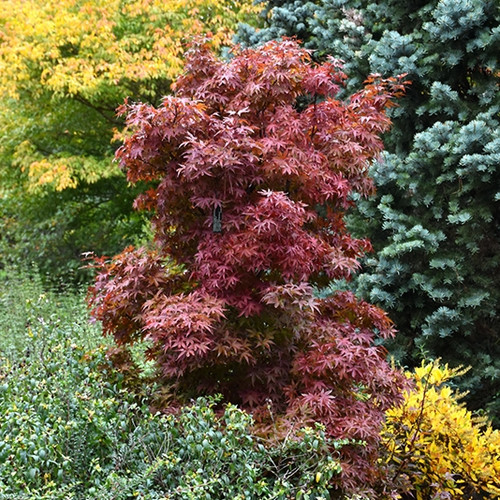
Red Maple features showy clusters of red flowers along the branches in early spring before the leaves. It has green deciduous foliage which emerges red in spring. The lobed leaves turn an outstanding red in the fall. It produces red samaras in late spring. The furrowed silver bark and brick red branches add an interesting dimension to the landscape.
The tree that lights up New England yellow and red in fall; a great shade tree, but very intolerant of alkaline soils; fall color is not consistently red in the species, so the many named cultivars are often chosen.
Red Maple is recommended for the following landscape applications;
- Accent
- Shade
Native to Ontario
Fall interest
Winter interest
Common Name: Maple, Native Red Maple, Red Maple
|
Key Feature
|
Light Needs | Landscape Uses |
 |
 |
 |
|
|
|
| More About Red Maple |
| Height: 50 ft |
Spread: 40 ft |
|
Red Maple should only be grown in full sunlight. It is quite adaptable, prefering to grow in average to wet conditions, and will even tolerate some standing water. It is not particular as to soil type, but has a definite preference for acidic soils, and is subject to chlorosis of the leaves in alkaline soils. It is somewhat tolerant of urban pollution. This species is native to parts of North America. Note that when grown in a container, it may not perform exactly as indicated on the tag - this is to be expected. Also note that when growing plants in outdoor containers and baskets, they may require more frequent waterings than they would in the yard or garden. Be aware that in our climate, most plants cannot be expected to survive the winter if left in containers outdoors, and this plant is no exception. NOTE: Some flowers and plants may be harmful or poisonous to people or pets if touched or ingested. If you require more information before placing an order, please let us know in advance. |