




| Malus domestica 'Red Delicious' | USDA Zone: 5-8 |
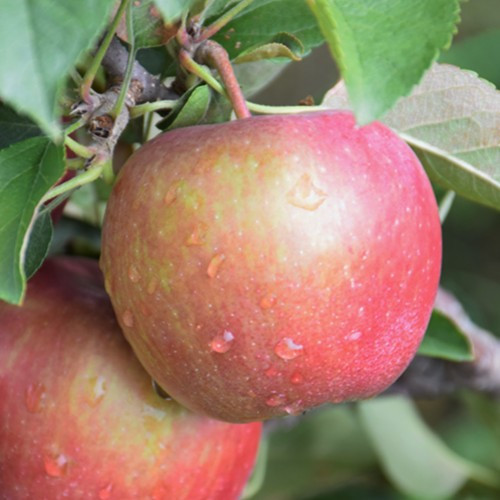
Red Delicious Apple is a small tree that is commonly grown for its edible qualities. It produces large dark red round apples (which are botanically known as 'pomes') with creamy white flesh which are usually ready for picking from late summer to early fall. The apples have a sweet taste and a crisp texture.
Possibly the most popular and famous dark red apple, very crispy with a sweet flavor, late harvest; eating apples are high maintenance and need a second pollinator; the perfect combination of accent and fruit tree, needs well-drained soil and full sun.
Red Delicious apple trees self-sterile and cannot pollinate themselves or other trees, requiring two different, compatible, mid-season blooming apple varieties.
More than one cultivar must be planted in order to facilitate the best pollination and subsequent fruit production. Ideal pollinators include Golden Delicious, Gala, Fuji, Granny Smith, and Braeburn.
The apples are most often used in the following ways:
- Fresh Eating
- Cooking
- Baking
Aside from its primary use as an edible, Red Delicious Apple is sutiable for the following landscape applications;
- Accent
- Shade
- Orchard/Edible Landscaping
Bloom Time: Spring
Large-sized, bright red fruit
Crisp, juicy, and mildly sweet. A favourite snacking apple.
Ripens: October
|
Key Feature
|
Light Needs | Landscape Uses |
 |
 |
 |
|
|
|
| More About Red Delicious Apple Fruit Tree |
| Height: 15-20 ft |
Spread: 15-20 ft |
Flower Colour: White / Pink Shades |
|
Needs another apple cultivar or flowering crab in the neighbourhood for pollination and subsequent fruit production. In many cases, you may want to plant pollinating partners to increase the size of your crops. Ultimate height and width of apple and other fruit trees depends on the pruning and production program. Note that when grown in a container, it may not perform exactly as indicated on the tag - this is to be expected. Also note that when growing plants in outdoor containers and baskets, they may require more frequent waterings than they would in the yard or garden. Be aware that in our climate, most plants cannot be expected to survive the winter if left in containers outdoors, and this plant is no exception. NOTE: Some flowers and plants may be harmful or poisonous to people or pets if touched or ingested. If you require more information before placing an order, please let us know in advance. |


