



| Prunus avium 'Bing' | USDA Zone: 5-8 |
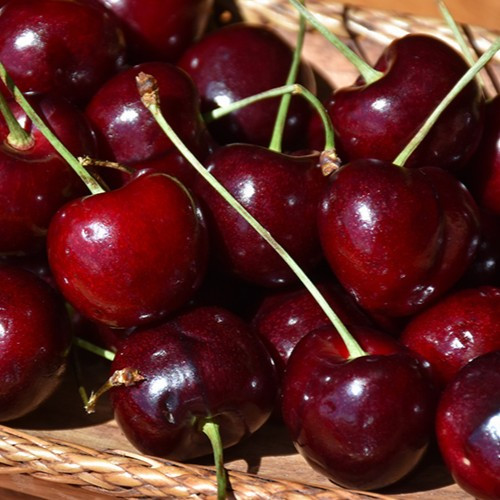
Bing Cherry is a large tree that is typically grown for its edible qualities. It produces dark red round fruit with black overtones and crimson flesh which are usually ready for picking from early to mid summer. Note that the fruits have hard inedible pits inside which must be removed before eating or processing. The fruits have a sweet taste and a juicy texture.
The most common commercial cherry variety featuring showy white flowers in spring followed by sweet deep red fruit, tall and upright, best for larger landscapes; needs full sun, well drained soil and a pollinator, be prepared to fight the birds for fruit.
Bing Cherry trees require cross-pollination; another cultivar of cherry in the area, flowering at the same time, in order to produce fruit. Bing Cherry can be successfully cross-pollinated with cultivars such as Lapins, Vandalay, Rainier, and Royal Ann.
Large, heart-shaped fruit with a deep maroon skin
Sweet, juicy flavour, great for eating fresh and preserves well
The fruit are most often used in the following ways:
- Fresh Eating
- Cooking
- Baking
- Preserves
- Canning
Aside from its primary use as an edible, Bing Cherry is sutiable for the following landscape applications;
- Shade
- Orchard/Edible Landscaping
Bloom Time: Spring
Fragrant
Other Names: Sweet Cherry, Mazzard Cherry
|
Key Feature
|
Light Needs | Landscape Uses |
 |
 |
 |
|
|
|
| More About Cherry - Bing Sweet Cherry Fruit Tree |
| Height: 25-30 ft |
Spread: 20-25 ft |
Flower Colour: White Shades |
|
Bing Cherry is typically grown in a designated area of the yard because of its mature size and spread. It should only be grown in full sunlight. It does best in average to evenly moist conditions, but will not tolerate standing water. It is not particular as to soil type or pH. It is highly tolerant of urban pollution and will even thrive in inner city environments. Note that when grown in a container, it may not perform exactly as indicated on the tag - this is to be expected. Also note that when growing plants in outdoor containers and baskets, they may require more frequent waterings than they would in the yard or garden. Be aware that in our climate, most plants cannot be expected to survive the winter if left in containers outdoors, and this plant is no exception. NOTE: Some flowers and plants may be harmful or poisonous to people or pets if touched or ingested. If you require more information before placing an order, please let us know in advance. |