




| Ilex verticillata 'Roberta Case' | USDA Zone: 3-9 |
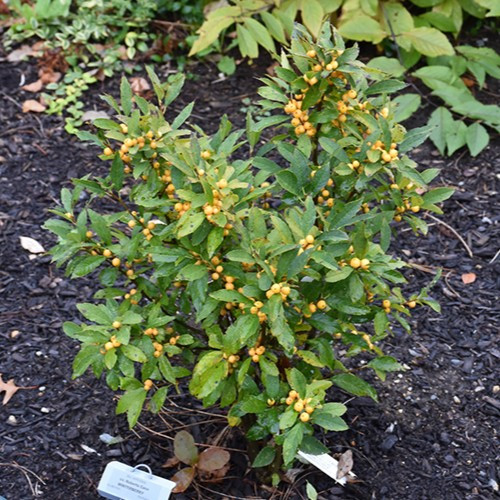
Berry Heavy® Gold Winterberry is primarily grown for its highly ornamental fruit. It features an abundance of magnificent gold berries from mid fall to late winter. It has forest green deciduous foliage. The pointy leaves do not develop any appreciable fall colour. Fruit is not edible.
An interesting and showy fall shrub known for its bright gold fruit; sheds leaves early in fall to reveal berries; spreads to form colonies; Mr. Poppins is recommended as pollinator; great in masses and particularly wet sites, needs acidic soil.
Berry Heavy® Gold Winterberry is recommended for the following landscape applications;
- Mass Planting
- Hedges/Screening
- General Garden Use
- Naturalizing And Woodland Gardens
Top reasons to grow Berry Heavy® Winterberry Holly:
- Sets more berries than conventional winterberry hollies
- Grows well in tough conditions, like shade and wet soil
- Adds color and interest to the winter landscape
- Attracts wildlife
Attracts Pollinators, Birds
Produces Ornamental Berries
Winter Interest
Deer Resistant
Common Name: Holly, Winterberry
Other Names: Black Alder
|
Key Feature
|
Light Needs | Landscape Uses |
 |
 |
 |
|
|
|
| More About Berry Heavy Gold Winterberry Holly |
| Height: 6-8 ft |
Spread: 6-8 ft |
Flower Colour: White Shades |
|
Berry Heavy® Gold Winterberry does best in full sun to partial shade. It prefers to grow in moist to wet soil, and will even tolerate some standing water. It is very fussy about its soil conditions and must have rich, acidic soils to ensure success, and is subject to chlorosis (yellowing) of the foliage in alkaline soils. It is somewhat tolerant of urban pollution. Consider applying a thick mulch around the root zone in winter to protect it in exposed locations. One male plant will pollinate up to 5 female plants; plant within 50' of one another to assure good pollination. It is best to avoid pruning winterberry hollies, except to remove whole branches for arrangements and decorating. Regular maintenance pruning or cutting back will impact the number of flowers and the quantity of fruit that the plant sets. Little pruning should be required, though very old branches can be removed in early spring if they are no longer producing vigorous growth. Note that when grown in a container, it may not perform exactly as indicated on the tag - this is to be expected. Also note that when growing plants in outdoor containers and baskets, they may require more frequent waterings than they would in the yard or garden. Be aware that in our climate, most plants cannot be expected to survive the winter if left in containers outdoors, and this plant is no exception. NOTE: Some flowers and plants may be harmful or poisonous to people or pets if touched or ingested. If you require more information before placing an order, please let us know in advance. |


