


| Acer palmatum 'Orange Dream' |
USDA Zone: 5-8 |
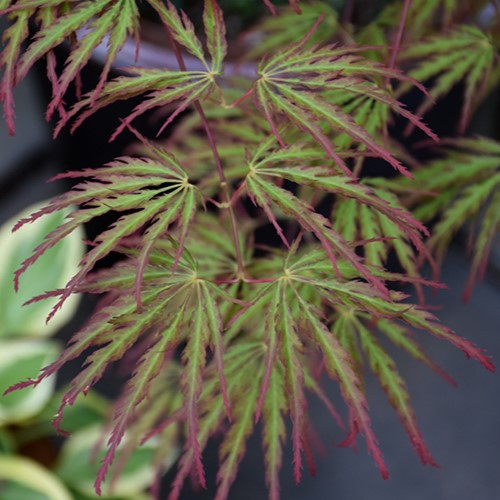
Orange Dream Japanese Maple is primarily valued in the landscape or garden for its ornamental upright and spreading habit of growth. It has attractive chartreuse foliage edged in orange which emerges orange in spring. The small lobed palmate leaves are highly ornamental and turn outstanding shades of orange and gold in the fall. The smooth green bark is extremely showy and adds significant winter interest.
This new introduction features beautiful leaves which emerge orange turning to lime-green for the summer then back to orange in fall for a truly dynamic season of growth; attractive green bark is catchy in winter, upright habit of growth; an ideal accent.
Orange Dream Japanese Maple is recommended for the following landscape applications;
- Accent
- Mass Planting
- Hedges/Screening
- General Garden Use
- Container Planting
Common Name: Japanese Maple, Orange Dream Japanese Maple
|
Key Feature
|
Light Needs | Landscape Uses |
 |
 |
 |
|
|
|
| More About Orange Dream Japanese Maple |
| Height: 10-12 ft |
Spread: 10 ft |
|
Orange Dream Japanese Maple does best in partial sun to partial shade. You may want to keep it away from hot, dry locations that receive direct afternoon sun or which get reflected sunlight, such as against the south side of a white wall. It prefers to grow in average to moist conditions, and shouldn't be allowed to dry out. It is not particular as to soil pH, but grows best in rich soils. It is somewhat tolerant of urban pollution, and will benefit from being planted in a relatively sheltered location. Consider applying a thick mulch around the root zone in winter to protect it in exposed locations. Orange Dream Japanese Maple is a fine choice for the yard, but it is also a good selection for planting in outdoor pots and containers. Its large size and upright habit of growth lend it for use as a solitary accent, or in a composition surrounded by smaller plants around the base and those that spill over the edges. It is even sizeable enough that it can be grown alone in a suitable container. Note that when grown in a container, it may not perform exactly as indicated on the tag - this is to be expected. Also note that when growing plants in outdoor containers and baskets, they may require more frequent waterings than they would in the yard or garden. Be aware that in our climate, most plants cannot be expected to survive the winter if left in containers outdoors, and this plant is no exception. NOTE: Some flowers and plants may be harmful or poisonous to people or pets if touched or ingested. If you require more information before placing an order, please let us know in advance. |