


| Phlox subulata 'Eye Caramba' | USDA Zone: 2-9 |
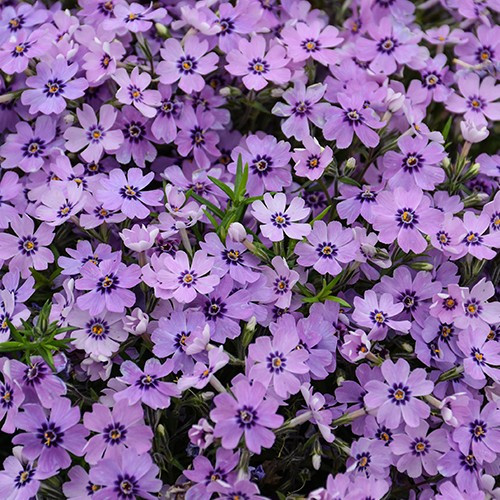
Eye Caramba Creeping Phlox is smothered in stunning pink star-shaped flowers with red eyes at the ends of the stems from mid to late spring. Its tiny needle-like leaves remain green in colour throughout the year.
A beautiful variety producing a showy display of bubblegum pink flowers with red eyes over mounds of bright green, needle like foliage; healthy, vigorous habit, wonderful for rock gardens, edging, or in mixed containers.
Eye Caramba Creeping Phlox is recommended for the following landscape applications;
- Mass Planting
- Rock/Alpine Gardens
- Border Edging
- General Garden Use
- Groundcover
- Container Planting
Bloomtime: Spring
Attracts Butterflies
Deer Resistant
Common Name: Creeping Phlox, Moss Phlox
|
Key Feature
|
Light Needs | Landscape Uses |
 |
 |
 |
|
|
|
| More About Eye Caramba Creeping Phlox |
| Height: 4-6 inches |
Spread: 12-14 inches |
Flower Colour: Pink / Red Shades |
|
Eye Caramba Moss Phlox does best in full sun to partial shade. It prefers dry to average moisture levels with very well-drained soil, and will often die in standing water. It is considered to be drought-tolerant, and thus makes an ideal choice for a low-water garden or xeriscape application. It is not particular as to soil type, but has a definite preference for alkaline soils. It is highly tolerant of urban pollution and will even thrive in inner city environments. Consider covering it with a thick layer of mulch in winter to protect it in exposed locations. Eye Caramba Creeping Phlox is a fine choice for the garden, but it is also a good selection for planting in outdoor pots and containers. Because of its spreading habit of growth, it is ideally suited for use as a 'spiller' in the 'spiller-thriller-filler' container combination; plant it near the edges where it can spill gracefully over the pot. Note that when grown in a container, it may not perform exactly as indicated on the tag - this is to be expected. Also note that when growing plants in outdoor containers and baskets, they may require more frequent waterings than they would in the yard or garden. Be aware that in our climate, most plants cannot be expected to survive the winter if left in containers outdoors, and this plant is no exception. NOTE: Some flowers and plants may be harmful or poisonous to people or pets if touched or ingested. If you require more information before placing an order, please let us know in advance. |