


| Rubus occidentalis 'Jewel' | USDA Zone: 4-8 |
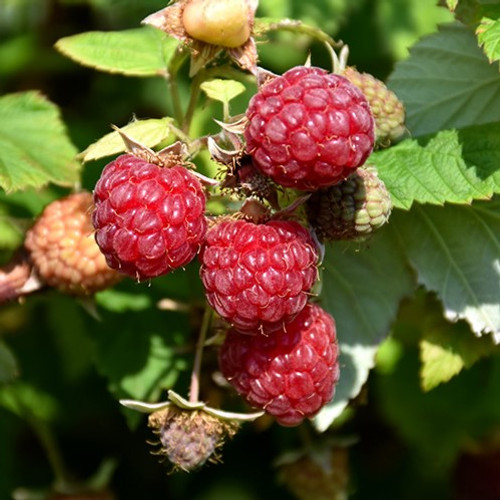
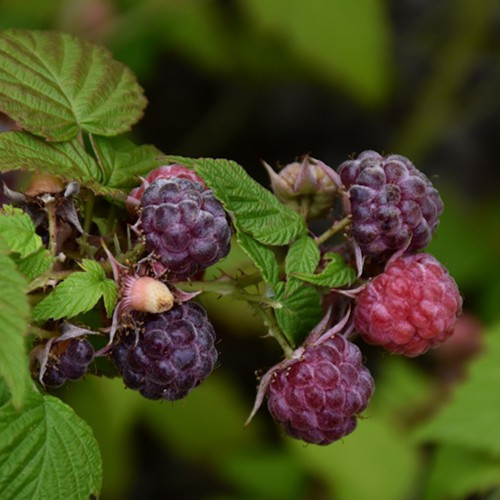
Jewel Black Raspberry is a small shrub that is commonly grown for its edible qualities. It produces large clusters of black heart-shaped berries which are usually ready for picking from late spring to early summer. The berries have a sweet taste and a juicy texture.
A relatively disease-resistant variety of black raspberry producing firm, glossy and flavorful fruit in summer; raspberries are quite shrubby looking and require careful placement in the landscape, a specific pruning regimen and protection from birds.
Jewel Black Raspberry is self-pollinating and does not need another raspberry variety to produce fruit; you only need one plant for berries, though planting more can yield a larger harvest.
The berries are most often used in the following ways:
- Fresh Eating
- Cooking
- Baking
- Preserves
Aside from its primary use as an edible, Jewel Black Raspberry is suitable for the following landscape applications;
- Mass Planting
- Naturalizing And Woodland Gardens
- Orchard/Edible Landscaping
Bloom Time: Spring, Summer
Common Names: Black Raspberry, Raspberry
Other Name: Blackcap Raspberry
|
Key Feature
|
Light Needs | Landscape Uses |
 |
 |
 |
|
|
|
| More About Jewel Black Raspberry |
| Height: 4 ft |
Spread: 3-4 ft |
Flower Colour: White Shades |
|
Jewel Black Raspberry may not always play well with others; as such, it is best grown in its own designated garden space or isolated area of an edibles garden. It should only be grown in full sunlight. It prefers to grow in average to moist conditions, and shouldn't be allowed to dry out. It is not particular as to soil type or pH. It is somewhat tolerant of urban pollution. Provide fertile, mildly acidic, well-drained soil. Water deeply, regularly in first growing season to establish root system. Produces on second-year canes; after harvest, prune away older canes that have fruited to the ground, leaving one-year-old canes to produce next season's crop. Train newer canes on a trellis. Feed in early spring. Note that when grown in a container, it may not perform exactly as indicated on the tag - this is to be expected. Also note that when growing plants in outdoor containers and baskets, they may require more frequent waterings than they would in the yard or garden. Be aware that in our climate, most plants cannot be expected to survive the winter if left in containers outdoors, and this plant is no exception. NOTE: Some flowers and plants may be harmful or poisonous to people or pets if touched or ingested. If you require more information before placing an order, please let us know in advance. |