



| Symphoricarpos x chenaultii 'Hancock' | USDA Zone: 5-7 |
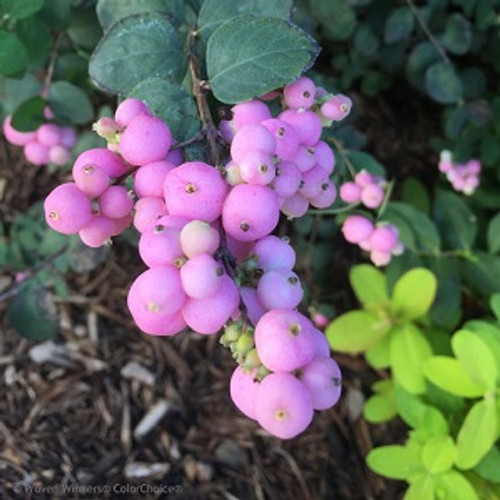
Hancock Coralberry is primarily grown for its highly ornamental fruit. It features an abundance of magnificent rose berries from early fall to late winter. It features subtle pink bell-shaped flowers along the branches in early summer. It has bluish-green deciduous foliage. The small oval leaves do not develop any appreciable fall colour.
A beautiful wide-spreading shrub with a thoroughly unique habit, arching stems and striking two-tone berries in white and rose-pink in fall; a first rate groundcover for texture and color, also good for controlling erosion on banks.
Hancock Coralberry is recommended for the following landscape applications;
- Mass Planting
- General Garden Use
- Groundcover
- Naturalizing And Woodland Gardens
Bloom Time: Summer
Attracts Pollinators
Attracts Birds
Fall Interest
Deer Resistant
Common Name: Coralberry, Snowberry
|
Key Feature
|
Light Needs | Landscape Uses |
 |
 |
 |
|
|
|
| More About Hancock Coralberr |
| Height: 2-3 ft |
Spread: 6-8 ft |
Flower Colour: Pink Shades |
|
Hancock Coralberry performs well in both full sun and full shade. It is very adaptable to both dry and moist locations, and should do just fine under typical garden conditions. It is not particular as to soil type or pH. It is somewhat tolerant of urban pollution. Snowberries are essential to North American wild landscapes because they naturalize so well. A superbly beautiful addition to wildlife habitat gardens as a late season food source for many species. Improved color and form has boosted them into high status in traditional shrub borders for late season interest. Plant as a low informal hedge or arrange in irregular groupings. A fresh new candidate for foundation planting. Add to any garden for a ready supply of colorful cut berry sprays for autumn decorating. Grows easily in a wide range of soil types. Water deeply, regularly during the first growing season to establish an extensive root system; reduce frequency, once established. Feed with a general purpose fertilizer before new spring growth. Naturally forms a thicket; suckers may be pruned to maintain size. Note that when grown in a container, it may not perform exactly as indicated on the tag - this is to be expected. Also note that when growing plants in outdoor containers and baskets, they may require more frequent waterings than they would in the yard or garden. Be aware that in our climate, most plants cannot be expected to survive the winter if left in containers outdoors, and this plant is no exception. NOTE: Some flowers and plants may be harmful or poisonous to people or pets if touched or ingested. If you require more information before placing an order, please let us know in advance. |