


| Baptisia alba | USDA Zone: 5-8 |
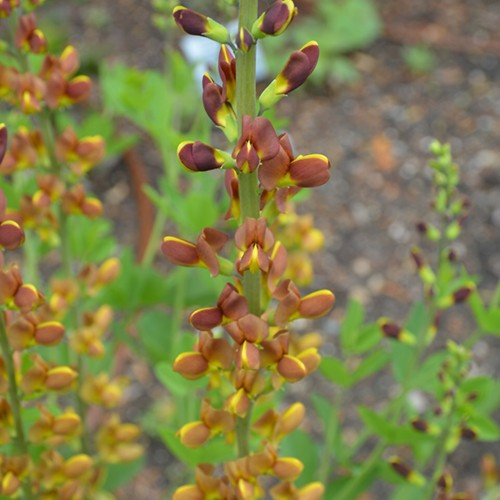
White False Indigo has masses of beautiful spikes of white pea-like flowers with creamy white overtones rising above the foliage from early to mid spring, which emerge from distinctive indigo flower buds, and which are most effective when planted in groupings. The flowers are excellent for cutting. Its oval leaves remain bluish-green in colour throughout the season. The fruits are showy black pods displayed in late summer. The indigo stems are very colorful and add to the overall interest of the plant.
Spectacular spikes of airy white pea-flowers rise from blue-green foliage in early summer; use this plant for its outstanding display of vertical flowers as an accent in the garden.
White False Indigo is recommended for the following landscape applications;
- Mass Planting
- General Garden Use
Bloom Time: Late Spring, Summer
Attracts Butterflies
Rabbit Resistant
Attracts Hummingbirds
Deer Resistant
Common Name: White False Indigo
|
Key Feature
|
Light Needs | Landscape Uses |
 |
 |
 |
|
|
|
| More About White False Indigo |
| Height: 24-36 inches |
Spread: 24 inches |
Flower Colour: White Shades |
|
Baptisia is easy to grow and will thrive with little maintenance. There are many potential applications in the landscape including meadow plantings, as a backdrop in borders, or as a specimen. Plants are very long-lived once established. Baptisia does best in full sun to partial shade. It is very adaptable to both dry and moist growing conditions, but will not tolerate any standing water. It is considered to be drought-tolerant, and thus makes an ideal choice for a low-water garden or xeriscape application. It is not particular as to soil type, but has a definite preference for alkaline soils, and is able to handle environmental salt. It is somewhat tolerant of urban pollution. Note that when grown in a container, it may not perform exactly as indicated on the tag - this is to be expected. Also note that when growing plants in outdoor containers and baskets, they may require more frequent waterings than they would in the yard or garden. Be aware that in our climate, most plants cannot be expected to survive the winter if left in containers outdoors, and this plant is no exception. NOTE: Some flowers and plants may be harmful or poisonous to people or pets if touched or ingested. If you require more information before placing an order, please let us know in advance. |